
Special Session 1
Special Session Title: Low-Carbon Demand-Side Flexibility and Grid-Interactive Loads in Smart Grids
Submission linkage: https://confsys.iconf.org/submission/pssgt2026 (please choose the title when you enter into the system)(Before September 20)
Organizers: 1) Assoc.
Prof. Li Liu, Guangxi University, China
2) Prof. Ningjiang Chen, Guangxi
University, China
3) Prof. Wenbo Zhang, Chinese Academy of
Sciences, China
4) Prof. Yinglong Ma, North China Electric Power University
Chair information: Assoc. Prof. Li Liu, Guangxi University, China
Short description of the proposed topic
This special session focuses on low-carbon demand-side flexibility and grid-interactive loads in smart grids. With the increasing penetration of renewable energy, modern power systems face growing uncertainty in power supply, electricity prices, and carbon intensity. Flexible electricity loads can provide valuable regulation capability for low-carbon dispatch and grid operation. This session welcomes research on carbon-aware load scheduling, risk-aware demand-side coordination, service-quality constrained load response, and intelligent optimization methods. Particular attention is given to emerging large electricity consumers, such as data centers, cloud computing facilities, and AI computing clusters.
Topics:
1.Carbon-aware demand-side flexibility
modeling in smart grids
2.Low-carbon scheduling and operation of
grid-interactive electricity loads
3.Risk-aware load dispatch under
renewable generation and carbon
intensity uncertainty
4.Power system operation with flexible
data center and computing loads
5.Service-quality constrained scheduling
of data centers and cloud computing
facilities
6.Robust, constrained, and
multi-objective optimization for
flexible demand-side resources
7.Intelligent optimization and
reinforcement learning for low-carbon
load scheduling
Novelty and motivation:
Modern smart grids are
facing two simultaneous changes. On the
supply side, renewable generation
increases the variability of electricity
supply and carbon intensity. On the
demand side, data centers and AI
computing facilities are becoming large
electricity consumers with considerable
scheduling flexibility. Their computing
tasks can be delayed, migrated, or
allocated to different computing
clusters, which creates a new form of
demand-side flexibility.
The regular PSSGT topics already cover
renewable energy integration,
distributed energy resources, energy
storage, demand response, electricity
markets, microgrids, and smart grid
digitalization. However, these topics do
not specifically focus on the emerging
coupling between power systems and
computing systems. This special session
is therefore different because it
centers on the coordinated operation of
electricity flow, carbon flow, and
computing workload flow.
The proposed session aims to attract
papers that study how data centers and
digital computing loads can actively
interact with smart grids under carbon
intensity uncertainty, renewable
fluctuation, electricity price
variation, and service quality
constraints. It provides a focused forum
for researchers in power systems, data
center energy management, carbon-aware
scheduling, and intelligent
optimization.
About the organizers
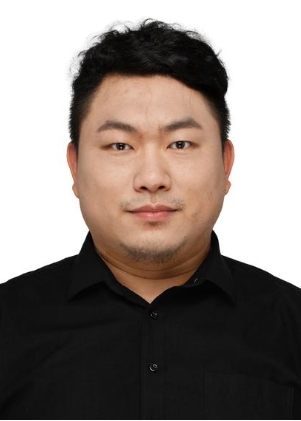 |
Li Liu is currently an Associate Professor at the School of Electrical Engineering, Guangxi University. His research interests include power quality, power electronics, transportation electrification, digital twins, and intelligent operation of electrical energy systems. His research is relevant to flexible load integration, low-carbon power system operation, and demand-side coordination in smart grids. |
 |
Ningjiang Chen is currently a Professor at the College of Computer, Electronics and Information, Guangxi University. His research interests include software engineering, cloud computing, distributed computing, service computing, and time-series analysis for smart grid applications. His recent work is closely related to intelligent forecasting, data-driven modeling, and computing system support for digitalized energy and smart grid scenarios. |
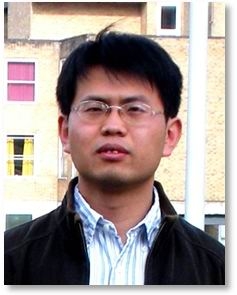 |
Wenbo Zhang is currently a Research Professor at the Institute of Software, Chinese Academy of Sciences. His research interests include distributed software systems, cloud computing, performance engineering, middleware technologies, and quality-of-service assurance. His expertise provides strong support for the computing-side modeling of grid-interactive data centers, cloud workloads, and power-computing coordination. |
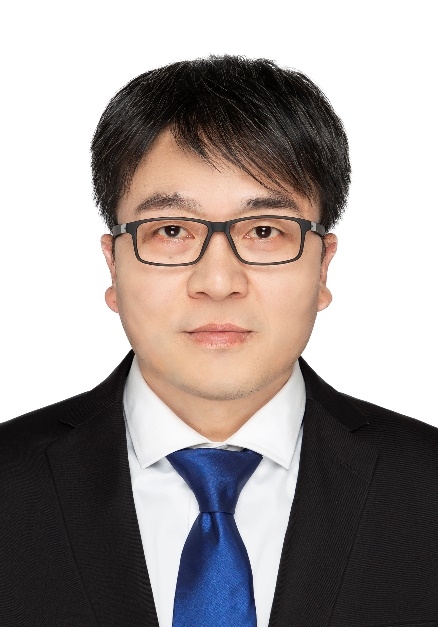 |
Yinglong Ma is currently a Professor at the College of Control and Computer Engineering, North China Electric Power University. His research interests include artificial intelligence, knowledge engineering, big data analytics, distributed computing, and service computing. His research is closely related to intelligent energy systems, smart grid digitalization, and data-driven decision-making for power system operation. |